What's the Best Window Tint for Night Driving Safety?
Night driving changes everything. The same
window tint that feels perfect at 2:00 p.m. can become a safety problem at 9:00 p.m. when you are trying to spot pedestrians, cyclists, deer, and lane edges on
Georgia roads. Many drivers around Marietta, Kennesaw, Smyrna, Acworth, and across Cobb County choose a dark tint for privacy and heat relief, then regret it after sunset when visibility drops and headlight glare feels harsher. The safest approach is to pick a tint percentage that keeps your nighttime visibility high while still improving daytime comfort. For most vehicles, the best tint for night driving safety is typically
35% to 50% VLT (Visible Light Transmission) on the front windows, because it lets in enough light to see clearly at night while still delivering UV protection and meaningful heat rejection. By contrast,
20% and 5% VLT can significantly reduce night visibility, especially on poorly lit roads. Choosing
ceramic tint matters too, because a lighter ceramic film can block more heat than a darker dyed film. If you drive at night often, prioritize visibility and safety over maximum darkness.
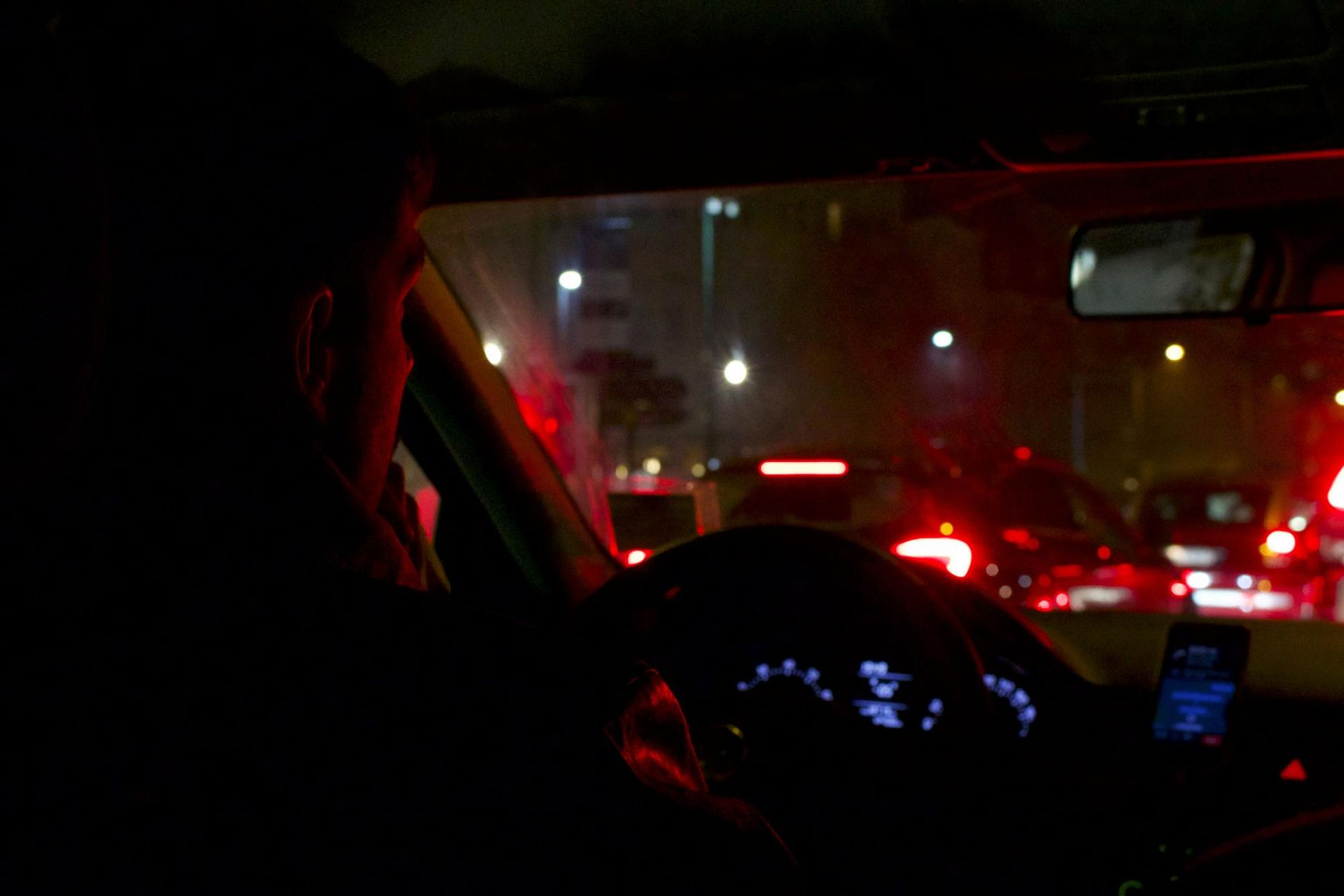
Table of Contents
- 1. Understanding VLT and how tint percentages affect nighttime visibility
- 2. How 50%, 35%, 20%, and 5% tint percentages perform at night
- 3. Night driving safety challenges with dark tint on Georgia roads
- 4. Why ceramic tint technology matters for night driving safety
- 5. Georgia legal considerations for safe window tint
- 6. How to choose the best tint percentage based on your driving habits
- 7. Balancing daytime comfort and nighttime safety with X-Treem Automotive
- FAQ: Night driving safety and tint percentage
- Conclusion and next steps
1. Understanding VLT and how tint percentages affect nighttime visibility
Direct answer: VLT is the percentage of visible light that passes through your glass and window film. A
higher VLT number means more light and better night visibility . A
lower VLT number means a darker appearance and less light reaching your eyes , which can reduce safety after sunset.
What VLT (Visible Light Transmission) really means
When drivers search “window tint night visibility” or “safe window tint percentage,” they are really asking how much light they will have available at night. VLT is a straightforward way to measure that. If a tint is labeled 50% VLT , roughly half of visible light is transmitted through the tinted window. If it is labeled 20% VLT , only about one fifth of visible light makes it through.
VLT is not just about the film. Glass itself often has a slight tint. That is why a shop will typically measure the final result (glass + film) to ensure your vehicle meets legal limits. For safety, what matters most is the final VLT you actually drive with , not just what is printed on a film box.
Why lower percentage equals darker tint and less light
Window tint percentages are often misunderstood. Many people assume “20%” means “20% tinted” and therefore not that dark. In reality, it means only 20% of visible light passes through. That is why 20% can look fairly dark in daylight and can feel noticeably dim at night.
As VLT drops, you lose more detail in the shadows. That matters when you are scanning for pedestrians stepping off curbs, looking for cyclists near the shoulder, or judging distance on a dim road in Cobb County where street lighting varies from block to block.
How darkness changes what you can see at night
Your eyes already work harder at night. Add tinted glass, and you further reduce the light available for your visual system to detect motion and contrast. The result can be a sense that “everything is fine” in well lit areas, but suddenly feels unsafe when you turn onto a darker road, encounter rain, or deal with glare from oncoming headlights.
A key point for “best tint for night driving” searches is this:
night driving requires more light transmission than daytime driving . Daytime sunlight is abundant, so darker tint may still feel usable. At night, you are operating near the limits of available light. That is why most safety focused recommendations land in the
35% to 50% VLT range for the front windows.
2. How 50%, 35%, 20%, and 5% tint percentages perform at night
Quick takeaway for Metro Atlanta drivers:
50% VLT offers the best night visibility,
35% VLT is the most popular safety focused balance,
20% VLT is often too dark for comfortable night driving on poorly lit roads, and
5% VLT can create severe visibility limitations and is not legal for Georgia front windows.
50% VLT: excellent night visibility, subtle daytime shading
If you frequently drive at night around Marietta, Kennesaw, or Smyrna,
50% VLT is the most forgiving choice for safety. It adds a light shade that reduces some glare and brightness in the day without making the cabin feel dim at night. Drivers who have experienced “too dark tint regret” often prefer 50% on the front doors because it feels close to stock visibility.
50% is also a strong choice for anyone with vision sensitivity, older drivers whose night vision is not what it used to be, or drivers who deal with rural stretches outside the immediate city core where lighting can be inconsistent.
35% VLT: the day and night balance most drivers can live with
35 percent tint night driving searches are common because 35% sits near the sweet spot. It noticeably improves daytime comfort and aesthetics, while still allowing enough light for most drivers to see clearly at night. For many daily drivers in Metro Atlanta, 35% VLT on the front windows delivers the balance they are aiming for: privacy without a “blackout” look, and comfort without sacrificing nighttime visibility.
35% is also a practical choice because it aligns better with Georgia’s front window requirements than darker options. Staying legal matters for safety too, because you avoid ticket risk and the complications of being stopped for an overly dark film.
20% VLT: reduced night visibility that becomes obvious on dark roads
20% VLT often looks great in the daytime and provides stronger privacy. The tradeoff is that it can feel significantly dim after sunset, especially when you are backing up into a driveway, navigating parking lots, or turning onto a road with limited overhead lighting. Drivers may also notice more difficulty seeing through the side windows when checking for pedestrians at crosswalks or scanning for vehicles in adjacent lanes.
For some people, 20% is “doable” in well lit areas. But in real world conditions around Cobb County, you do not always have perfect lighting. Add rain, fog, or dirty glass, and the visibility penalty becomes more pronounced. For front windows, 20% is typically not recommended for night driving safety and may not meet legal limits once the combined glass and film are measured.
5% VLT (limo tint): severe limitations and major safety concerns at night
5% VLT is commonly called limo tint. It is extremely dark. At night, it can make side visibility feel heavily restricted, particularly in low light environments. Checking blind spots, seeing a person near the roadway, or reading subtle cues like a wheel turning can become harder.
Equally important for Georgia drivers: 5% is not legal for front side windows in most cases and tends to raise law enforcement visibility concerns during traffic stops. Even if the goal is maximum privacy, using 5% on front windows is not a “tint percentage for safety” choice.
Comparison table: tint percentage for safety at night
| VLT % | Daytime appearance | Nighttime visibility rating | Seeing pedestrians/obstacles | Poorly lit roads | Headlight glare management | Heat rejection (with ceramic film) | Overall night driving safety |
|---|---|---|---|---|---|---|---|
| 50% VLT | Very light shade, subtle | Excellent | Strong, minimal dimming | Performs well | Moderate help, depends on film clarity | Good to very good (ceramic dependent) | Excellent |
| 35% VLT | Medium shade, popular look | Good | Good for most drivers | Generally safe, some dimming | Moderate to good, depends on film quality | Very good (quality ceramic) | Good |
| 20% VLT | Dark, strong privacy | Poor | Reduced, especially in shadows | Challenging | Can feel worse due to dimming and contrast loss | Very good if ceramic, lower if dyed | Not recommended |
| 5% VLT | Very dark, limo look | Dangerous | Limited visibility | High risk | Often feels harsher because you see less detail | Varies by film type | High concern |
3. Night driving safety challenges with dark tint on Georgia roads
Direct answer: Dark tint can reduce your ability to detect hazards early. The biggest risks are missing pedestrians and obstacles, struggling on poorly lit roads, and losing reaction time because you see threats later than you would with a higher VLT film.
In Marietta and surrounding Metro Atlanta areas, night driving often includes mixed lighting. Downtown corridors may be bright, but residential streets, parking lots, and connecting roads can be surprisingly dark. Lower VLT tint can make it harder to see a person stepping into the roadway, a cyclist without reflective gear, or debris near the lane edge. The safety issue is not only “can you see,” but
how early you see .
Reduced visibility of pedestrians, cyclists, and roadside obstacles
Early detection matters because braking distance and reaction time are fixed realities. When tint reduces the available light, your brain may identify hazards later. That compresses the time you have to make a safe decision.
Difficulty seeing in poorly lit areas, rural pockets, and in bad weather
Even in Cobb County, you can encounter stretches where lighting drops quickly. Add rain and wet pavement reflections, and visibility is reduced for everyone. Dark tint compounds that reduction. Many drivers who thought their tint was fine realize the problem during the first rainy night or during early winter sunsets when roads are darker during commuting hours.
If you do any driving toward less urban areas, or you frequently take routes where street lighting is sparse, you should treat tint selection as a safety equipment decision, not just a styling choice.
Glare and “halo” effects from oncoming headlights
Drivers often assume darker tint will always reduce glare. In practice, glare is complex. Oncoming headlights can appear as harsh points of light at night, and if your side window is very dark, you may see less of the surrounding environment, which makes the headlight contrast feel stronger. Some drivers describe this as a “halo” or “starburst” effect.
Film quality and optical clarity matter here. A low quality film can add haze or distortion that makes glare feel worse. That is why choosing the right film type, not just a dark percentage, is important for “best tint for night driving” outcomes.
Slower reaction times and higher risk during emergency situations
Emergency situations at night require rapid scanning and decision making. If you do not see a hazard until it is closer, you have fewer options. That can show up in real life as a late lane change, sudden braking, or missing a person near the roadway until the last moment.
The safest window tint percentage is the one that gives you the greatest margin when conditions are imperfect, which is most nights. For many drivers, that margin is best preserved at 35% to 50% VLT on the front windows.
4. Why ceramic tint technology matters for night driving safety
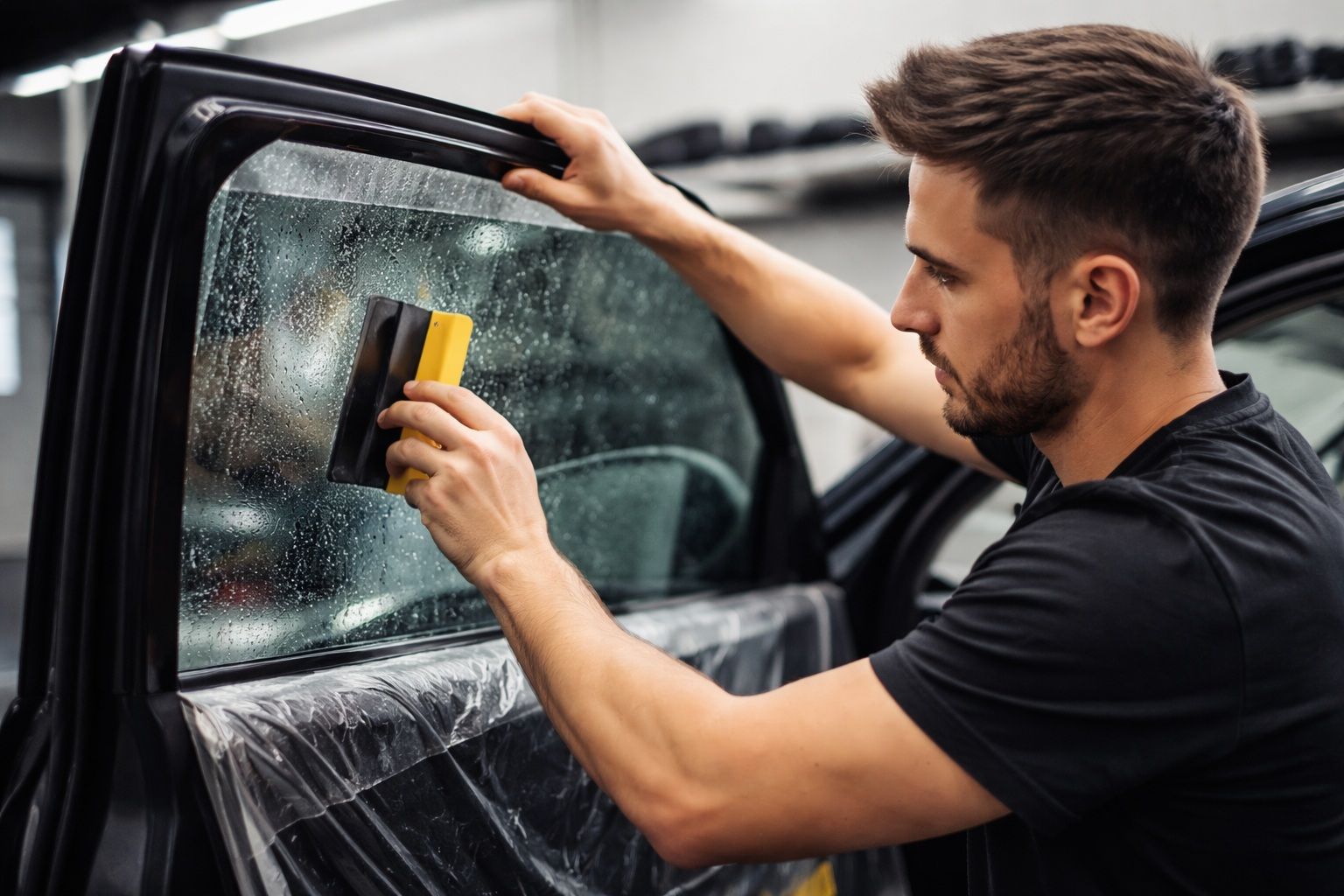
Direct answer: Ceramic tint helps you keep a lighter, safer VLT while still improving heat rejection and UV protection. That is why many safety focused drivers choose 35% or 50% ceramic rather than going darker with a dyed film.
Lighter ceramic tint can reject more heat than darker dyed film
Many drivers choose darker tint because they want heat relief. The problem is that darkness alone is not a reliable indicator of heat rejection. Modern ceramic films are designed to reduce infrared heat while maintaining strong optical clarity. This is especially useful in Georgia, where heat and sun load are major concerns for drivers who want comfort without compromising safety.
In practical terms, a 35% ceramic film can often provide better heat performance than a 20% dyed film , while still allowing more visible light for night driving.
Optical clarity matters as much as percentage
Two films with the same VLT can feel different at night. A higher quality film typically offers better clarity, less haze, and less distortion. That is important when you are checking mirrors, scanning for movement, or watching for subtle lane cues in low light. If your goal is window tint night visibility, prioritize film clarity and professional installation quality, not just a darker look.
No “mirror” effect that can worsen nighttime reflections
Some lower end films can create unwanted reflections or a shiny look that distracts the eye at night. Drivers may notice reflections of interior lights or bright instrument clusters. While any tint can reflect to some degree, film construction and quality influence how distracting that reflection becomes.
Choosing a premium ceramic window film and keeping front window VLT in the safer range helps maintain a natural view at night, which supports better driving confidence and decision making.
Secondary comparison: 35% ceramic vs 20% dyed for real world safety
| Factor | 35% VLT Ceramic | 20% VLT Dyed |
|---|---|---|
| Night visibility | Better due to higher light transmission | Worse due to darker cabin and side view |
| Heat rejection | High (ceramic is designed for heat control) | Lower (dye mainly darkens, less IR control) |
| Comfort in Georgia sun | Strong comfort improvement while staying safer at night | May feel cooler mainly because it is darker, but not as efficient |
| Optical clarity | Typically clearer (depends on product tier) | Can be hazier depending on film quality |
| Best fit | Daily drivers with mixed day and night conditions | Drivers prioritizing privacy who rarely drive at night |
5. Georgia legal considerations for night driving safety
Direct answer: Georgia law requires the front side windows to allow more than 32% VLT . Staying compliant supports safety and reduces the risk of tickets and traffic stops related to window tint.
32% VLT minimum for front windows and why it matters
For drivers searching “tint percentage for safety” in Georgia, legality is part of the answer. If your front window tint is too dark, you risk enforcement action, but you also risk choosing a setup that reduces your own night visibility. A legal compliant approach pushes most drivers toward the 35% to 50% range for front windows, which aligns with safety focused visibility goals.
Because factory glass may already reduce VLT slightly, the final measured VLT can come in lower than expected. That is one reason many Metro Atlanta drivers prefer 35% or 50% rather than trying to “push” the limit with 30% style films.
Law enforcement visibility and traffic stop safety
Excessively dark front windows can raise safety concerns during traffic stops, because officers may have difficulty seeing inside the vehicle. While the main focus for drivers is personal safety and night visibility, it is also practical to choose a tint level that does not draw attention or create avoidable complications.
Ticket risk, re-tint costs, and avoidable regret
Going too dark can create a double cost: the safety cost of reduced night visibility, and the financial cost of potential tickets or needing to remove and replace film. If you are in Marietta, Kennesaw, Smyrna, or Acworth and want the best tint for night driving, it is usually smarter to select a compliant, visibility friendly VLT and upgrade film technology (ceramic) rather than chasing maximum darkness.
6. How to choose the best tint percentage based on your driving habits
Direct answer: Choose tint like you choose headlights or tires. Start with your driving environment. If you drive at night often, pick 35% to 50% VLT . If you rarely drive at night and prioritize privacy, you may consider darker options where legal, but the front windows are still best kept lighter for safety.
Frequent night driving: 35% to 50% VLT is the safety first range
If your commute includes early mornings or late evenings, or you regularly drive after dinner, after events, or for work shifts, your best tint for night driving is typically 35% or 50% on the front windows. This is especially true if you drive through mixed lighting zones around Cobb County, where bright main roads connect to darker side streets.
Between the two, 50% is the easiest for night visibility. 35% is the stronger daytime look and still safe for most drivers. If you are unsure, many drivers who value safety start at 50% and only go darker if they are confident night driving will remain comfortable.
Mostly daytime driving: 20% to 35% may be acceptable, but confirm your night use
If you drive mostly during the day and want more privacy, you may consider 35% or possibly 20% in some cases. The key is honesty about your real routine. Many “daytime drivers” still end up driving at night due to seasonal sunset times, weather, errands, or unexpected travel. If you pick 20% and later realize night driving feels stressful, the tint is no longer serving your needs.
Mixed driving conditions: 35% is often the practical compromise
For many daily drivers in Metro Atlanta, mixed conditions are the norm. You want heat relief in the summer, you want comfort in traffic, and you still need to see clearly when you are out after dark. That is why 35% VLT is often recommended as a compromise. It is dark enough to look like “tinted windows,” yet light enough to remain usable at night for most drivers.
Rural vs urban environments: lighting changes the safe window tint percentage
Urban roads with strong lighting and reflective lane paint can hide the downsides of darker tint. Rural or less lit roads reveal them. If your routes include darker areas, choose a higher VLT. If you primarily drive in well lit commercial zones, you may tolerate a darker front window tint, but the safety margin is still lower.
7. Balancing daytime comfort and nighttime safety with X-Treem Automotive
Drivers searching “window tint Marietta GA” often want two outcomes that can conflict: cooler cabins in the Georgia sun and strong visibility after dark. The most reliable way to achieve both is to choose a safer VLT and invest in premium ceramic window film rather than going darker with a basic film type.
A simple recommendation most drivers can follow
If you want a clear, safety first starting point that still looks good on most vehicles, consider 35% to 50% VLT on the front windows , paired with a quality ceramic film for strong heat rejection. This approach is consistent with the search intent behind “safe window tint percentage” and “best tint for night driving,” and it aligns with Georgia’s front window requirements.
Why professional guidance matters
Two people can react differently to the same tint percentage at night. Vision sensitivity, age, headlight type, windshield angle, and route lighting all play a role. A professional shop can help you evaluate the right balance based on how you actually drive in Marietta, Kennesaw, Smyrna, Acworth, and the surrounding Metro Atlanta area.
X-Treem Automotive serves Metro Atlanta drivers who want a practical, safety focused tint setup, not just the darkest possible look. The goal is simple: choose a tint percentage for safety that you will feel confident with at 10:00 p.m. on a dim road, not only at noon in the sun.
FAQ: Night driving safety and tint percentage
What is the best tint percentage for night driving safety?
For most drivers, 35% to 50% VLT on the front windows offers the best balance of night visibility, safety, and daytime comfort.
Is 35% tint too dark for night driving?
For most drivers, 35% VLT is not too dark, but it can feel dimmer on poorly lit roads compared with 50%.
Can you see at night with 20% tint?
Many people can still drive with 20%, but night visibility is noticeably reduced, especially in rain, rural areas, or dark parking lots.
Is 50% tint dark enough for daytime heat?
Yes, 50% ceramic tint can provide meaningful heat and UV protection while keeping excellent night visibility.
Does ceramic tint help with night visibility?
Ceramic tint helps by letting you choose a lighter VLT without giving up heat rejection. Film clarity can also be better depending on the product.
What tint percentage is safest for night driving?
50% VLT is typically the safest for night visibility, and 35% VLT is the common balance for daily drivers.
Will 5% tint make night driving dangerous?
It can create severely limited side visibility at night and is not a safe choice for front windows.
How does tint percentage affect headlight glare at night?
Darker tint reduces overall light, which can increase contrast and make glare feel harsher. A quality film and a safer VLT help maintain detail and comfort.
What tint percentage do most people get for daily driving?
Many daily drivers choose 35% VLT for the front windows as a balance of appearance and usability.
Is darker tint worse for night driving safety?
Generally, yes. Lower VLT means less light, which can reduce hazard detection and confidence at night.
Can you drive safely at night with 20% tint?
Some drivers can, but it is less forgiving and more challenging on poorly lit roads. Safety-focused drivers usually stay closer to 35% to 50%.
What tint percentage blocks heat without reducing night visibility?
Often, 35% to 50% ceramic tint is the best solution because it maintains visibility while improving heat rejection.
Does Georgia have restrictions on tint darkness for safety?
Yes. Georgia requires the front side windows to allow more than 32% VLT, which supports both legal compliance and safer night visibility.
What does X-Treem Automotive recommend for drivers who commute at night?
For night commuters, a common recommendation is 35% to 50% VLT on the front windows, ideally using a premium ceramic window film.
Conclusion and next steps
If your priority is safety after sunset, the tint decision is straightforward. For most drivers in Marietta and the Metro Atlanta area, 35% to 50% VLT provides the best balance of daytime comfort and nighttime visibility. 50% VLT is the most forgiving for night driving, while 35% VLT is the common “best overall” option for daily drivers who want a noticeable tint without sacrificing safety. Darker levels like 20% and especially 5% can compromise night visibility and are not the right choice for drivers who frequently drive at night on Georgia roads.
Equally important, ceramic tint technology lets you stay in a safer VLT range while still achieving strong heat rejection and UV protection, which is the smarter way to balance comfort with safety. If you are researching the best tint for night driving, focus on what you will see at 10:00 p.m., not only how the car looks at noon.
If you are in Marietta, Kennesaw, Smyrna, Acworth, or anywhere in Cobb County and want help choosing a
safe window tint percentage for your driving habits,
contact
X-Treem Automotive for a consultation. We can help you select the right VLT and film type so your vehicle feels cooler during the day and stays confident and clear at night.